
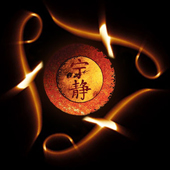
Blue Sun = 'Young' Sun?
POSTED BY: GaijinFlyer
UPDATED: Saturday, November 3, 2007 15:25
VIEWED: 18050
PAGE 1 of 2

I lived in Japan for a few years (thanks, Navy) and remember that the character for blue was also used for new/young.
I was wondering if Chinese had the same connotation for the 'blue' character?
Might be interesting to think that the Blue Sun corporation was named to reflect the new Sun that people encountered after colonizing the new earths/moons.
NOTIFY: Y | REPLY | REPLY WITH QUOTE | PERMALINK | TOP | HOME

Quote:
Originally posted by GaijinFlyer:
I lived in Japan for a few years (thanks, Navy) and remember that the character for blue was also used for new/young.
I was wondering if Chinese had the same connotation for the 'blue' character?
Don't know about Chinese, but physics definitely does. A blue sun is massive, burning brightly & quickly. They are from ten million to a few hundred million years old, compared to Sol @about five thousand million.
Keep the Shiny Side Up . . .
NOTIFY: Y | REPLY | REPLY WITH QUOTE | PERMALINK | TOP | HOME

There are many words that describe "blue" in chinese.
the word 藍 generally describes the deeper blues such as ultramarine and navy.
the word 青 implies a pale greenish-blue. And often used as various greens. It's also used to describe things that are young, such as fruits.
Most people use the first word when describing various blue colors, for it is a word that doesn't have any meanings other than the color.
Lithi@EstateSerenity.net
NOTIFY: Y | REPLY | REPLY WITH QUOTE | PERMALINK | TOP | HOME
I actually consulted my chinese friends grandma, ad the direct translation of the blue sun kanji actually means Blue Day, the blue is the color of a dark blue, but the supposed kanji for sun is actually day. I dont know how intentional is was for it to really say blue day, but I think it's fairly ironic in a way.
NOTIFY: Y | REPLY | REPLY WITH QUOTE | PERMALINK | TOP | HOME
that same word can mean "day" and "sun". So you don't have to question the original intent. Also, it's not very nice to refer Chinese Characters as "kanji".
Lithi@EstateSerenity.net
NOTIFY: Y | REPLY | REPLY WITH QUOTE | PERMALINK | TOP | HOME

The Japanese language is comprised of Hiragana, Katagana, Kanji and Romanji.
Hiragana is used to write typically Japanese sounds.
Katagana is used to transliterate foreign names and sounds.
Kanji are Chinese characters borrowed by the Japanese.
Romanji are the "Roman" letters used by westerners.
You Chinese friend's grandmother must be Japanese.
The Character for 'blue' in 'Blue Sun' is correct.
Quote:
Originally posted by Fishay:
I actually consulted my chinese friends grandma, ad the direct translation of the blue sun kanji actually means Blue Day, the blue is the color of a dark blue, but the supposed kanji for sun is actually day. I dont know how intentional is was for it to really say blue day, but I think it's fairly ironic in a way.
Paul
NOTIFY: Y | REPLY | REPLY WITH QUOTE | PERMALINK | TOP | HOME

Would it be fair to say that 'friend's grandma' was in Taiwan or the northern mainland during Japanese Occupation during the Pacific War and picked up her Japanese speech and Japanese-biased interpretations from such experience?
As far as using 'kanji' to describe all glyphs Simplified, Traditional, Japanese (borrowed or specific), or Korean (borrowed/specific), etc. - what else have you heard them called out in the streets?
It sounds like the basis for a television survey: "Excuse me Miss, can you think of a single word to describe or name, collectively, Chinese characters?"
Kanji is really all I ever hear here in Arkansas (y'know, the state ranking second-to-dead-last in educational quality in the United States?) for most anyone who can think of just one word. I understand the offense - I've read much about Japanese occupation, the Chinese 'holocaust', comfort girls and the like; but honestly, what other word have you heard spoken by the collective American 'sheeple' who generally see little to the world outside what their television shows them? Maybe I’m referring to anime, as it was simply the first of East-Asian-made media I was witness to, causing me to see East Asia according to a largely Japanese (not necessarily Japanese-favoring) bias.
On topic, there could be dual meaning to the choice of characters in 'Blue Sun'. If on one hand, the characters are literally 'Blue' and 'Sun', and on the other hand, the characters could mean 'young' 'day', could this not be a lop-sided way of expressing that the company ushers a new dawn with its products and services?
An opinion merely, which is to say I have no idea what I'm talking about.
===============
Traits:
*Addiction/Caffeine(1) *Alertness *Allergy/Pollen(1) *Combat Paralysis(1) *Fast Learner *Good Hearing *Tech Empathy *Vehicle(1) *Owns Vehicle
*Anarchist *Dependants(2) *In For Life/Browncoat *Introvert *Patience *Quirk/Jerk(1) *Quirk/Stubborn(2)
*Quirk/Regret Wasting School Years(1) *Stigma/Abjured Christian *Stigma/American *Stigma/Ricer
*Stigma/Pizza Delivery Driver
NOTIFY: Y | REPLY | REPLY WITH QUOTE | PERMALINK | TOP | HOME
Han Zi is a correct word for reffering to Chinese Characters (There is another which I can't remember). Or Han Yu for the Chinese Language (Again there is another which I cannot remember.)
But the sun character is used as both sun or day. It is interchangeable in certain circumstances, but not all.
.....
"It's just an Object"
NOTIFY: Y | REPLY | REPLY WITH QUOTE | PERMALINK | TOP | HOME
Quote:
Originally posted by AnObjectinSpace:
Han Zi is a correct word for reffering to Chinese Characters (There is another which I can't remember). Or Han Yu for the Chinese Language (Again there is another which I cannot remember.)
But the sun character is used as both sun or day. It is interchangeable in certain circumstances, but not all.
In my limited studies of Chinese we learned that
Hanzi means characters (singular or plural),
Zhongwen is the written language and Hanyu is the
official name for the spoken language especially
as it is spoken in the northern part of the
mainland.
Hanzi can also mean Chinese men (singular or
plural), depending on the inflection. I found the
language extremely entertaining but dreadfully
embarrassing. Possibly the 2 go together.
NOTIFY: Y | REPLY | REPLY WITH QUOTE | PERMALINK | TOP | HOME
After discussing with alot of my chinese friends, we felt that 青 is really the best for Blue Sun. There is alot of confusion as to whether it means green or blue, but the conlusion seems to be "light blue". I personally think 青 is much more accurate.
Alot depends on whether you are talking to Chinese from Taiwan or China...
One day.
One plan.
One army of Browncoats.
On June 23rd, we aim to misbehave.
NOTIFY: Y | REPLY | REPLY WITH QUOTE | PERMALINK | TOP | HOME