

Romanticization of the Civil War
POSTED BY: Niki2
UPDATED: Tuesday, August 4, 2026 09:53
VIEWED: 15839
PAGE 5 of 13

Quote:
Originally posted by Geezer:
I don't recall the Revolutionary war freeing the slaves.
Excellent example of deliberately misrepresenting your opponent's point.
You are good at being slimy.
"I thoroughly disapprove of duels. If a man should challenge me, I would take him kindly and forgivingly by the hand and lead him to a quiet place and kill him."
NOTIFY: Y | REPLY | REPLY WITH QUOTE | PERMALINK | TOP | HOME

Onward. Sig, your dig at Geezer, as you can see from the above, is inaccurate. It wasn’t States Rights to continue slavery, it WAS States Rights to begin with. You’re right that the Constitution doesn’t apply to secession. I don’t think the South should apologize and shoulder their “guilt”, as they weren’t the initial aggressors, but I do agree they should move on.
Geezer IS right in that the South didn’t “invade” the North, nor did they want to overthrow the government. I disagree, however, that nonviolent means would have solved the problem; when you realize the problem was differences in economics and government control, that wouldn’t have changed...plus the war wasn’t BEGUN about slavery, that was an excuse used later.
Sig, although your reference to Western expansion is right on the money, I say again, it wasn’t about slavery; the States Rights issue was another issue all together. Yes, they wanted to expand their way of life Westward, but I don’t see that as the primary reason for the War, at all. On the other hand, good cites on secession. I think it’s something that can be argued about forever, but if you look at the REASONS they wanted to secede, it becomes irrelevant whether the Constitution left room for it or not, doesn’t it?
Oops, there comes Frem; as I predicted, he’s clearing it up. I won’t go back and delete the references I made, since they’re still valid, give more comprehensive information, and don’t carry Frem’s (with respect) biased viewpoint.
Again, Geezer, “buying off” the Confederacy wouldn’t have worked, as the initial problem was ECONOMIC, the Confederate states’ strength because of the cheap price of cotton v. the Northern states desire to lessen that discrepancy (or overcome it) via tariffs, etc., AND the question of States Rights. The divide went much deeper than the issue of slavery which, again, only came into it TWO YEARS after the war began.
But Sumter is a valid point, Mike, and yes, Ticonderoga was about the War for Independence, which I see as a whole different issue. And again I make the argument, Mike, that the two are not comparable in that the Colonies were just that—not a legitimate part of British Government—whereas the Confederate states were part of a union. I see a big difference, so we’ll have to agree to disagree on that point.
Whew! The rest was mostly snarking, so I won’t respond to it. Geezer is more right than wrong, Sig, and I don’t buy your put-downs that he was ignoring the slaves as “people”. He was talking about direct cost of the War itself; if you want to expand that, you can, but I don’t think it’s valid because, again, THE WAR WASN’T ABOUT SLAVERY. End of story.
"I'm just right. Kinda like the sun rising in the east and the world being round...its not a need its just the way it is." The Delusional "Hero", 3/1/10
NOTIFY: Y | REPLY | REPLY WITH QUOTE | PERMALINK | TOP | HOME
Here's a judgment for you, and not a self-righteous one because I'm guilty of the same thing:
Sig and Story, your snarking and accusations are a prime example of why reasonable discussion is difficult (not impossible, as with some others, just difficult) here. Geezer has attempted to make his points reasonably, and his poins in large are GOOD ONES; you're stuck on slavery, slavery, slavery and not only not addressing the facts, but having digs at him to boot.
There, that's my pronunciation for the day, and I say it because, knowing the truth of the history, as I read down I see it that way. I think if you re-read what you've written from the vantage point that the war WASN'T about slavery, you might get some insight. No (serious) offense intended.  JMHO.
JMHO.
"I'm just right. Kinda like the sun rising in the east and the world being round...its not a need its just the way it is." The Delusional "Hero", 3/1/10
NOTIFY: Y | REPLY | REPLY WITH QUOTE | PERMALINK | TOP | HOME

Niki, I disagree.
The South and the North did develop differently. And the major difference was that the basis of the southern economy was SLAVERY. Before mechanization, that was the only way to make an agrarian (cotton) economy profitable. The south was protecting its source of wealth, which was the extraction of agrarian value and the subjugation of a people via slavery. Then as now, the wealthy southerners (ie plantation owners, cotton merchants etc.) had a disproportionate say in the politics of the day, and they managed to winkle poorer southerners to go along with their plan.
All of the crap that people hang on to the civil war after the fact is so much gafla.
ALWAYS FOLLOW THE MONEY.
NOTIFY: Y | REPLY | REPLY WITH QUOTE | PERMALINK | TOP | HOME

Quote:
Posted by Niki:
Geezer IS right in that the South didn’t “invade” the North, nor did they want to overthrow the government.
Wrong. The South marched armies into the North and fought battles there. I don't know where you're from, but where I'm from that's called an invasion. And the simple historic fact that the South tried to secede from the Union, then attacked Union positions, and then went to war with the Union, *IS* by its very definition an attempt to violently overthrow the legitimately-elected government of the United States. Sorry you can't see that, but it's plain as can be to me.
You can argue semantics all day long, but the semantics of it is, it always and in all ways came down to slavery. Economics? The economics of WHAT? The economics of an agrarian-based economy in the South, based on slave labor. States' rights? States' rights to do WHAT? Continue to own and exploit slaves, that's what.
"I supported Bush in 2000 and 2004 and intellegence [sic] had very little to do with that decision." - Hero, Real World Event Discussions
NOTIFY: Y | REPLY | REPLY WITH QUOTE | PERMALINK | TOP | HOME
Ganted the South's supremacy economically was based on cheap cotton. Given that abolition wasn't declared until two years into the war, however, who's right and who's wrong? Economically, the North wanted the South weakened. Equally so, the South wanted to maintain their economic supremacy. So in THAT way, the war WAS about slavery. But it wasn't begun as about "slavery" specifically, some Northerners owned slaves and were quite happy to go on doing so.
Ergo, the war, to me, wasn't about slavery, it was, as you said, about finances. AND about states rights.Quote:
(just a taste from http://www.civilwarhome.com/statesrights.htm, which delves into the details of the disagreements about states rights)
The Constitution could be interpreted in opposite ways. In its clause giving Congress all powers "necessary and proper" for carrying the specified powers into effect, Alexander Hamilton as secretary of the treasury found ample authorization for his financial program, including a national bank. In the Tenth Amendment, however, Thomas Jefferson as secretary of state discovered a bar to congressional legislation of that kind: no power to establish a bank having been delegated to Congress, that power must have been reserved to the states. As president, George Washington sided with Hamilton and signed the bills that Congress passed to enact Hamilton's plan. Eventually Jefferson withdrew from the Washington administration and, with Madison, organized an opposition to it. Thus, in the 1790s, originated the two parties, Federalist and Republican, the one willing to exploit the "implied powers" of the Constitution, the other demanding a "strict construction" of the document.
The Republicans, already convinced that much of the Federalist legislation was unconstitutional, were further outraged when, in 1798, Congress passed the Alien and Sedition Acts. The Sedition Act--providing for the fining and imprisoning of those who uttered anything "false, scandalous, and malicious" against the government, the Congress, or the president--seemed flagrantly to violate the First Amendment, which stated that Congress should pass no law abridging freedom of speech or of the press.
Now, given the North's first salvo in weakening the South was the tarriffs (and there were more things enacted to further that weakening), who "fired" the first "salvo"? Admittedly the South was resisting them to MAINTAIN their own financial power via cheap cotton. But in my opinion, the North started it by misues of their legislative power. IF they managed to secede, they'd be the stronger economic power. I see that to be as much reason for the North going after them as anything else; if they allowed secession, they'd be the weaker power. Given their superiority in manufacture and industrialization, weapons of war gave them the surpremacy in a war. Ergo...
On the other hand, South had political power, and used it to continue their agenda.Quote:
Politically, Henry Clay was a Jeffersonian Democrat. An advocate of a protective tariff to aid the nation's young industries, he also supported making internal improvements at national expense and establishing a national bank. He was a border-state politician who owned slaves but favored gradual emancipation and stipulated in his will that his slaves be freed.
The sectionalism that divided the United States before the Civil War concerned more than just slavery, states' rights, and protective tariffs. Opinions differed on either side of the geographical split between the North and the South over the disposition of land owned by the federal government. In the decade before the war, three land-grant measures that had strong Northern support were defeated by Southern politicians.
A homestead act would have made free western land available to unemployed working men and given them a chance to be independent landowners and farmers. Laborers who did not move west to take advantage of the free land would also benefit because with less competition for jobs, they
NOTIFY: Y | REPLY | REPLY WITH QUOTE | PERMALINK | TOP | HOME

Thanks Niki, for alla that.
I had to cut that shorter than I woulda liked last night cause I hadda run off and go relieve one of my guys, who's gonna be out for a while cause I told him not to show his face to me for six weeks, in a pretty harsh fashion.
LOL, no, it's not what you might think - his wife dropped the bomblet last night and he's now a daddy, and I was like "Dude, that's half your fault, YOU go do half the work!" - he's a devoted gaurd, but shit man, you don't lay the whole rap on your wife, not when your boss offers you a month and a half of maternity leave, so I hadda give him a lecture on responsibility to his marriage, etc etc...
He cares, it's just that he's mortally terrified of being outta work or even away from work cause the last company he was with, he took his weeks vacation and they called him demanding he cut it short (and lose the other four days) and when he refused, fired him on the spot - so his fear is not getting bills paid and food on the table, and he got insistent, and I snarled at him - he'll get over it, I'm sure, especially when I take all the junk we rounded up over there tonight to present him with, crib, stroller, baby bag, diaper pail, alla that kinda thing.
Annnyhowsss, to the point at hand.
=============================
Lincoln was, as is any politician, basically fulla shit, he didn't give a shit about slavery any more than a modern republican really gives a shit about gay marriage or abortion, it was just a wedge issue to start some shit in an effort to further the Federalist agenda of a strong central super-government which trumped both state governments and the will of the people, and to do that he had to get rid of that pesky mutual consent thing.
Mutual consent means also, the right to STOP consenting, to NOT consent, and it was this that the southern states wished to do, they wanted to LEAVE the union, peaceably go their own way, and Lincoln wasn't havin none of it.
As pointed out, it was far more politics and economics than anything else, and consider well that most southern folk didn't own slaves, so what were THEY fighting for ?
And don't even shine me, they were not the poor deluded ignorants you can try to make them out to be, any more than the farmers of the whiskey rebellion were, they knew, mostly, WHY they were picking up arms, and they *did* for the most part see it as self-defense, especially once Sherman got rolling with his reign of terror - deliberately attacking civilian infrastructure was one of the things that, while not "officially" a war crime, was prettymuch considered the like, as was shooting troops trying to surrender (See also: Tarletons Quarter) looting, and prettymuch everything Sherman DID while down there - and yes, armies and soldiers do such things, but it's one thing for your troops to get a bit out of hand, which in that era was both more common and a hell of a lot more difficult to settle without modern communication technologues... and fully another to ORDER them to do it!
Sherman was a bastard for sure, but as he himself stated, he was a bastard following his issued orders, rather than explicitly bloodthirsty himself.
Grant on the other hand - ok, how do you reconcile the Union being "anti slavery" when they forced their own citizens to fight their brethren at gunpoint via conscription, shelled civilian populations for noncompliance, and then waged a war of attrition seeking to "bury them in bodies" uncaring of how many died, since they could just conscript more ?
Is not gunpoint military service a form of slavery, and a worse one at that ?
1776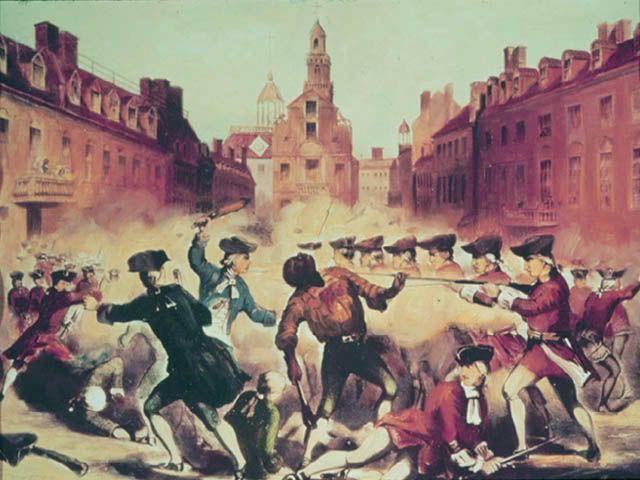
1863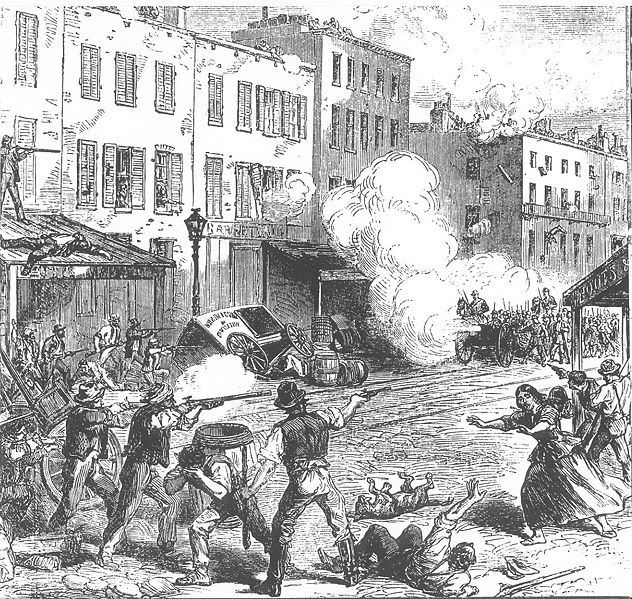
I ain't seein a lotta difference there, save for what color the folks gunnin down the citizenry wore.
And my opinion on Lincoln is founded primarily on his behavior, much of which is patently inexcusable, and the strong evidence that much of his and Grants behavior was
NOTIFY: N | REPLY | REPLY WITH QUOTE | PERMALINK | TOP | HOME
Quote:
Originally posted by Niki2:
I can’t find any information on racism by state, tho’ I tried every word combination I could come up with...
Try checking hate crimes by state.
Here's one. showing hate crimes in general.
http://www.civilrights.org/publications/hatecrimes/appendix-d.html
And here's one showing hate crimes based on race.
http://www.statemaster.com/graph/cri_hat_cri_rac_rel-crime-hate-crimes
-race-related
"Keep the Shiny side up"
NOTIFY: Y | REPLY | REPLY WITH QUOTE | PERMALINK | TOP | HOME
'Fraid I can't accept that, Geezer. Hate crimes don't necessarily reflect racism, and the racism can go many ways--here the biggest race problem is hispanices. I don't see that it breaks down per capita, either, and we're a very populous state. The idea of California being #1 I just don't accept, given how little racism I see in the state. Can't speak for So. Cal., but up here, it's just not that evident.
But we can agree to disagree, I'm happy with that. I don't think it can be done, actually, as there's a problem with people admitting their racist OR even knowing consciously they are. So...
"I'm just right. Kinda like the sun rising in the east and the world being round...its not a need its just the way it is." The Delusional "Hero", 3/1/10
NOTIFY: Y | REPLY | REPLY WITH QUOTE | PERMALINK | TOP | HOME
Quote:
Originally posted by Niki2:
'Fraid I can't accept that, Geezer.
Then I don't know what to tell you. I have no idea why you think folks in the South are more racist. maybe you could tell me where you got the information that makes you think this.
It seems to me that if there are very few racial hate crimes (mostly in single digits) in the Deep South states (The Carolinas, Georgia, Alabama, and Mississippi) that that reflects pretty well on racial attitudes.
Organized hate groups, like the Klan, seem to be pretty well distributed coast-to-coast, per the ADL.
http://www.adl.org/learn/ext_us/kkk/active_group_2006.asp?learn_cat=ex
tremism&learn_subcat=extremism_in_america&xpicked=4&item=kkk
Madame Geezer and I just completed a three week road trip through the South from Galveston to Apalachicola along the Gulf Coast, and we saw black people and white people working together and socializing and dining with each other - from a Sunday Brunch at the Peabody Hotel in Memphis to a seafood shack in Lake Charles, to the Varsity in Atlanta. We saw plenty of bi-racial couples who were treated just like anyone else.
I grew up in the South and was there when segregation was in full swing, I also spend a good bit of time there now, and the change is remarkable. If you won't take the word of someone who lived through it, then I guess we do have to "agree to disagree".
"Keep the Shiny side up"
NOTIFY: Y | REPLY | REPLY WITH QUOTE | PERMALINK | TOP | HOME