
What are the Alliance ?
POSTED BY: FarscapePKWars
UPDATED: Thursday, December 1, 2005 08:58
VIEWED: 10185
PAGE 1 of 3
Clearly we have some stuff going on like the Alliance between the US and China, and this interpol thing happening. But what are the Alliance really about, sometimes it looks as if they are not too bad, they are a bit mean but other people within seem to live comfortable lives like Simon/River's family did. Other times the Alliance look like a regime of conquest maybe a little like those giant Spanish/European ships that went to S.America for exploration and colonisation. However the Alliance sometimes look very bad, like a scary Totalitarian Nazi leadership, Alliance have little forgiveness and understanding.But are things better in other worlds, more democratic... at the same time in other episodes they don't look so brutal, are they Soviets or Imperial-Capitalists, is hierarchy important ?
NOTIFY: Y | REPLY | REPLY WITH QUOTE | PERMALINK | TOP | HOME
Whedon has suggested that sometimes the Alliance is like the US in Nazi Germany, sometimes like the US in Vietnam. I haven't heard a comparison made between the Alliance and the US in Iraqi, though one has been made between the fictional Browncoats and the people of Iraq - oh, that would be me 
Quote:
"Mal's politics are very reactionary and 'Big government is bad' and 'Don't interfere with my life,'" Whedon told the New York Times. "And sometimes he's wrong–because sometimes the Alliance is America, this beautiful shining light of democracy. But sometimes the Alliance is America in Vietnam: we have a lot of petty politics, we are way out of our league and we have no right to control these people. And yet! Sometimes the Alliance is America in Nazi Germany. And Mal can't see that, because he was a Vietnamese."
NOTIFY: N | REPLY | REPLY WITH QUOTE | PERMALINK | TOP | HOME
Quote:
Originally posted by PurpleBelly:
Whedon has suggested that sometimes the Alliance is like the US in Nazi Germany, sometimes like the US in Vietnam. I haven't heard a comparison made between the Alliance and the US in Iraqi, though one has been made between the fictional Browncoats and the people of Iraq - oh, that would be meQuote:
"Mal's politics are very reactionary and 'Big government is bad' and 'Don't interfere with my life,'" Whedon told the New York Times. "And sometimes he's wrong–because sometimes the Alliance is America, this beautiful shining light of democracy. But sometimes the Alliance is America in Vietnam: we have a lot of petty politics, we are way out of our league and we have no right to control these people. And yet! Sometimes the Alliance is America in Nazi Germany. And Mal can't see that, because he was a Vietnamese."
good quote, it starts to explain a lot
NOTIFY: Y | REPLY | REPLY WITH QUOTE | PERMALINK | TOP | HOME

I have developed my own model of what I reckon the Alliance is like for the Fic Series I write based on what we have observed of it. I'm too lazy by half to write it all out again but here's a section from one chapter which might be helpful.
Quote:
‘Economically the Alliance can be thought of as primarily mercantilist in nature, that is to say it is capitalist but without the notion of free trade or much in the way of state restrictions on monopolies’ Steven began. ‘In many ways it can be seen as a parallel to the situation within the gradually emerging economic situation during the 18th Century in that large companies formed to take advantage of the new colonial enterprises and whilst society was gradually industrialising in some areas agriculture still dominated the lives of many.’
The academic started pacing up and down as was his habit when teaching. ‘You can take the comparison further’ he said. ‘To give an example, during this time period on Earth-That-Was there was a private colonial concern known as the “East India Company” which was set up on the Indian Sub-Continent. Originally it was just a business but over the years it expanded its interests and eventually operated its own army both to protect these interests and expand them still further.’
‘In the end the British government and the East India Company became so entwined that it was hard to distinguish where one began and the other ended. Business turned to informal Empire and eventually outright annexation of territory.’ Steven said. ‘In a similar way the big terraforming companies and conglomerates of today were originally just private concerns but as they expanded outwards to develop new worlds the line was blurred between their perceived interests and those of the state.’
‘The Alliance bankrolled a number of these ventures through loans. It also lent troops to protect its investments. As the state became more and more involved in these private ventures the conglomerates similarly became more and more wrapped up in the state especially given the number of formally state-run sectors that were either privatised outright or contracted out such as communications.’
‘Money of course is another factor. Many politicians were either bought outright or else persuaded into voting one way or the other by well funded lobbyists with corporate backing.’
‘As the dividing line between the conglomerates and the government faded it was inevitable that it the end the needs of business would far outweigh the needs of the people, or indeed capitalism itself’. Steven paused to take a drink. ‘As they developed some of the outer planets had begun to industrialise and although such competition is actually beneficial to the economy as a whole it was bad news to the established firms in the core which fought back by persuading the government to introduce the diabolical tariff system we have to put up with now.’
‘Ironically this suppression of competition is one reason why the vastly outmatched Independent industrial base kept us going so long. Many of the core factories insulated from competition were highly inefficient and bureaucratic by comparison to the newer more dynamic enterprises on the rim. They had many times the industrial potential but nowhere near the individual productivity per worker which is one reason why all those gleaming core metropolises didn’t crush the Browncoats instantly under a tidal wave of logistics like they really should have.’
‘The other reasons were of course down to frequently poor tactical doctrine and a thorough lack of intestinal fortitude.’ Steven continued.
‘A lack of what did you say?’ Claire-Marie asked.
‘Intestinal fortitude’ Steven repeated. ‘Otherwise known as guts’ he continued smiling and slapping his stomach. ‘The bellies may have been purple on the outside but they were often yellow underneath’ he joked. ‘You can’t take some poor core draftee who’s lived a nice comfortable life for eighteen years drop him off in the middle of nowhere with a rifle and expect him to fight as hard as someone who is on theirNOTIFY: Y | REPLY | REPLY WITH QUOTE | PERMALINK | TOP | HOME
Hotpoint, that was an excellent post. The economic dynamics of the 'verse is interesting indeed.
More to the generic point however, The "Alliance" as many of us know is short for the "Anglo-Sihno Alliance" (pronounced see-no) first established by the decendents of the inital American and Chinese Settlers of the Galaxy. At a time in the near future, the 2 superpowers on Earth are supposed to be China and the U.S.A. China is 1st to colonize a planet which they name Sihnon. The U.S. follows up with their 1st colony, Londinum.
As some time passed the two cultures merged and humanity continued to colonize the 'verse. In this time Earth was "used-up". Likely the resources of the planet went dry while at the same time pollution took it's toll. That's why everyone refers to earth as Earth-that-was.
As time went on, Sihnon and Londinum became capitals of the core worlds. Each world sharply reflects the cultures that established it with Sihnon being very asian and Londinum looking like it was cut out of the U.S. or the U.K. The two planets are each refered to in the pilot episode. Inara refers to Sihnon as the home world of the Companion's Guild. She tells her client in the pilot that words cannot capture the beauty of the great city of Sihnon, it's like an ocean of light. Likewise, Mal refers to the other core world to Kaylee when she wants to spend money to replace the compression coil. Mal replys: "And I'd like to be the king of all Londinum and wear a shiny hat" (BTW, this doesn't mean the hat is glossy. We know that shiny="cool" in future slang. It took me a while to get that. I keep seeing a shiny hat in my mind, not a "spiffy" hat)
The Alliance itself is the overarcing government that controls the core. This is obviously a mirror of the Union during the 1860's. The Alliance is more concerned about unification of humanity and less concerned about human rights. Concepts like slavery, aristocracy, and unregulated capitalism flurish in the Alliance. In such political systems there are always going to be more unfortunates than fortunates. In general, it's a recipe for a revolution by those abused and oppressed (rim worlders). I found it interesting that the American Civil War was fought (in part) by the union to end slavery. In this future it is the confederacy (Independance) that is fighting against slavery. These would be the poor folks that slavers snatch and drop in teraforming crews. Also possible the folks Reavers occasionally raid.
The general nature of the Alliance is hard to fully wrap your mind around. Just as Hotpoint's post indicates, The alliance is hard to distinguish from corporate interests(Blue Sun) and the emerging aristocracy created when wealth is held by a very few. The Allaince/Blue Sun/Aristocracy relationship is identical to the 18th century Parliament/East Inda Company/Royality relationship.
I love how Joss Whedon was able to craft such an intricate and utterly plausable future.
NOTIFY: Y | REPLY | REPLY WITH QUOTE | PERMALINK | TOP | HOME

Quote:
The Alliance is more concerned about unification of humanity and less concerned about human rights. Concepts like slavery, aristocracy, and unregulated capitalism flurish in the Alliance. In such political systems there are always going to be more unfortunates than fortunates. In general, it's a recipe for a revolution by those abused and oppressed (rim worlders).
I hate to be picky, but large monopolistic corporations are almost always creations of government regulations, not the results of unrestrained capitalism. In fact, we know from Shindig that economic life is so highly regulated that the lord can't sell a few score cows. I think, more than anything, The Alliance represents the extent people will cede freedom to government in the name of the greater good. Every alliance laws sounded like a good idea at the time, but, at the end of the day, you turn around and realize all your freedom is gone.
NOTIFY: Y | REPLY | REPLY WITH QUOTE | PERMALINK | TOP | HOME
Quote:I so agree. So many things are falsely blamed on "unrestrained capitalism." If capitalism were truly unrestrained, there wouldn't be any huge monopolies. A true free market would allow competitors to put stagnant monoliths out of business, or at least challenge them enough to keep consumers' interest in the forefront.
Originally posted by hobomagic:
I hate to be picky, but large monopolistic corporations are almost always creations of government regulations, not the results of unrestrained capitalism.
Take big oil for example. A true free market would have long allowed small companies championing alternative fuels to challenge our slavish dependence on petroleum. But it is because capitalism is so restrained in our society that small companies have to jump through prohibitively expensive hoops to raise money and stay alive. These hoops are supposedly there to protect the consumer, but in reality, they protect big money from small potatoes with the great ideas. They can't afford the hoops, and big oil keeps their monopoly on fuels.
If you look at American history, you'll find scores of inventor/entrepreneurs squashed by the restraints of capitalism, in bed with government. In fact, that is my notion of the Alliance--the love child of both greed and coercion.
Do big corporations need to have checks and balances? You bet. But those checks never work when coming from government--because those restrictions work on both big business and its natural enemies, small business. Government restrictions end up serving big business by killing off their small business competitors.
Can't Take My Gorram Sky

NOTIFY: Y | REPLY | REPLY WITH QUOTE | PERMALINK | TOP | HOME
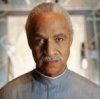
The true face of the Alliance...
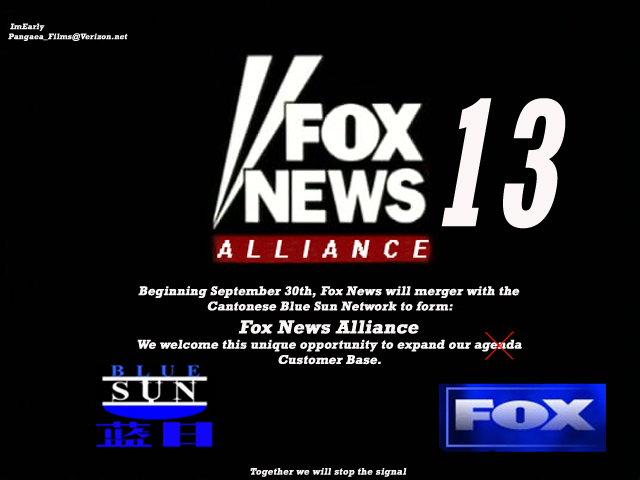
Sorry, could not resist.
Go sign my Guest Book,
http://www.geocities.com/thisbrownhouse
Then download Serenity,
http://homepage.mac.com/rocketplane/FileSharing8.html

NOTIFY: Y | REPLY | REPLY WITH QUOTE | PERMALINK | TOP | HOME
Quote:
Together we will stop the signal.
OMG, ROFL. That is funny. Thanks.
Can't Take My Gorram Sky
NOTIFY: Y | REPLY | REPLY WITH QUOTE | PERMALINK | TOP | HOME
Quote:
Originally posted by hobomagic:
I hate to be picky, but large monopolistic corporations are almost always creations of government regulations, not the results of unrestrained capitalism.
If that was the case then this website would not exist
http://www.usdoj.gov/atr/
Unregulated capitilism creates monopolies. It has been proven solidly in the american 19th century in the form of JP Morgan and various railroad, steel, oil, and ore mining barons. Here is another site that will further educate:
http://projects.vassar.edu/1896/trusts.html
The Firefly 'verse is rife with unregulated capitilism. The nobleman in Shindig, Lord Warrick Harrow, was attempting to evade Persephone tariff restrictions, or rather export taxation, for moving his cattle to Jiangyin for sale in the episode 'Safe'. Tariffs and taxes can easily co-exist in a government with lax regulation on monoplies. By local Persephone law, he would have had to pay a % of the total cattle's value in order to export it offworld. Thats when smart tax-evading businessmen turn to smugglers.
What ppl need to understand here is the difference between Anti-trust issues and tarrifs.
Do not fear me. Ours is a peaceful race, and we must live in harmony.
NOTIFY: Y | REPLY | REPLY WITH QUOTE | PERMALINK | TOP | HOME