

A thread for Democrats Only
POSTED BY: THGRRI
UPDATED: Sunday, September 6, 2026 15:36
VIEWED: 755368
PAGE 422 of 725

During his 2016 presidential campaign, Donald Trump — even though he had dubbed himself “the king of debt” — promised to slash the mounting national debt until it was completely eliminated within eight years. Four years on, how’s that going? Not well. The National debt is more than $27 trillion, up from less than $20 trillion when Trump took office.
www.marketwatch.com/story/ted-cruz-is-asked-why-national-debt-is-param
ount-to-republicans-only-when-a-democrat-is-in-the-white-house-11603831170
Texas Senator Ted Cruz is asked why national debt is paramount to Republicans only when a Democrat is in the White House
The Joss Whedon script for Serenity, where Wash lives, is Serenity-190pages.pdf at www.mediafire.com/folder/1uwh75oa407q8/Firefly
NOTIFY: Y | REPLY | REPLY WITH QUOTE | PERMALINK | TOP | HOME
Trump Killed the Pax Americana
www.nytimes.com/2020/10/29/opinion/trump-trade-international-relations
.html
There are, I suppose, some people who still imagine that if and when Donald Trump leaves office we’ll see a rebirth of civility and cooperation in U.S. politics. They are, of course, hopelessly naive. America in the 2020s will remain a deeply polarized nation, rife with crazy conspiracy theories and, quite possibly, plagued by right-wing terrorism.
But that won’t be Trump’s legacy. The truth is that we were already well down that road before he came along. And on the other side, if the Democrats win big, I expect to see many of Trump’s substantive policies reversed, and then some. Environmental protection and the social safety net will probably end up substantially stronger, taxes on the rich substantially higher, than they were under Barack Obama.
Trump’s lasting legacy, I suspect, will come in international affairs. For almost 70 years America played a special role in the world, one that no nation had ever played before. We’ve now lost that role, and I don’t see how we can ever get it back.
You see, American dominance represented a new form of superpower hegemony.
Our government’s behavior was by no means saintly; we did some terrible things, supporting dictators and undermining democracies from Iran to Chile. And sometimes it seemed as if one of our main goals was to make the world safe for multinational corporations.
But we weren’t a crude exploiter, pillaging other countries for our own gain. The Pax Americana arguably dated from the enactment of the Marshall Plan in 1948; that is, from the moment when a conquering nation chose to help its defeated foes rebuild rather than demanding that they pay tribute.
And we were a country that kept its word.
To take the area I know best, the United States took the lead in creating a rules-based system for international trade. The rules were designed to fit American ideas about how the world should work, placing limits on the ability of governments to intervene in markets. But once the rules were in place, we followed them ourselves. When the World Trade Organization ruled against the United States, as it did for example in the case of George W. Bush’s steel tariffs, the U.S. government accepted that judgment.
We also stood by our allies. We might have trade or other disputes with Germany or South Korea, but nobody considered the possibility that America would stand aside if either country was invaded.
Trump changed all that.
What, for example, is the point of a rules-based trading system when the system’s creator and erstwhile guardian imposes tariffs based on transparently bad-faith arguments — such as the claim that imports of aluminum from Canada (!) threaten national security?
How useful is America as an ally when the president suggests that he might not defend European nations because, in his judgment, they don’t spend enough on NATO?
Is America still the leader of the free world when top officials seem friendlier to nations like Hungary, where democracy has effectively collapsed — or even to murderous autocracies like Saudi Arabia — than to longstanding democratic allies?
Now, if Trump is defeated, a Biden administration will probably do its best to restore America’s traditional role in the world. We’ll start following trade rules; we’ll rejoin the Paris climate accord and rescind plans to withdraw from the World Health Organization. We’ll assure our allies that we have their backs, and rebuild alliances with other democracies.
But even with the best will in the world, this egg can’t be unscrambled. No matter how good a global citizen America becomes in the next few years, everyone will remember that we’re a country that elected someone like Donald Trump, and could do it again. It will take decades if not generations to regain the lost trust.
The effects may, at first, be subtle. Other countries probably won’t rush to confront a Biden administration. There might even be a sort of global honeymoon
NOTIFY: Y | REPLY | REPLY WITH QUOTE | PERMALINK | TOP | HOME
Why Freedom means something different for conservatives and liberals
The political right today is marked by a deep conviction that its freedom stands imperiled everywhere. Social distancing measures and face mask requirements, conservatives argue, impinge upon their personal freedom; baking cakes for gay marriages or providing contraception insurance for employees violates their religious freedom; university safe spaces and political correctness censor their freedom of speech in the classroom; expanding health care undermines their liberty. Each of these ways of thinking about freedom is connected to the idea that the state must be curtailed in order to safeguard individual rights.
However, this idea of freedom, argues the political historian Annelien de Dijn in her new book Freedom: An Unruly History, is a relatively recent invention. Seeing a threat to their class interests and property rights, wealthy conservative elites launched an ideological campaign. As an alternative, they invented the idea that political freedom was to be found in protecting individuals by limiting the sphere of government.
Annelien de Dijn: My interest in the history of freedom was sparked about a decade ago, when the Obama administration attempted to reform the health care system, which sparked a fierce backlash. Thousands of Americans took to the streets to march against Obamacare, claiming that it posed a mortal danger to freedom. I found that very puzzling. How can you say that expanding health care—a measure supported by an overwhelming majority of Americans—is something that undermines your liberty? More generally, why insist that every attempt by the government to improve the lives of its citizens diminishes their freedom? Where did this individualistic or even nihilistic conception of freedom come from?
I think that the questions that originally spurred my research remain just as relevant today as they were a decade ago, when I started writing the book. If the US response to Covid-19 has made anything clear, it’s that this anti-government way of thinking about freedom is still quite prevalent.
If you take the long view, it becomes clear that our current way of thinking about freedom—being able to do what you want without state interference—is actually a fairly recent invention. For centuries, people in what we now think of as “the West” identified being free with exercising collective control over government. They had what I call a democratic conception of freedom: A free state was one in which the people ruled itself. To them, the key to preserving political freedom was staving off elite domination.
Today we tend to put more faith in countermajoritarian institutions as a way to preserve liberty. We tend to think that our freedoms are best protected by institutions such as the Supreme Court—a council of elders supposedly above politics. That’s because we have come to think that democratic majorities, not elite rule, are the real threat to liberty. This would have been very strange to the ancient Greeks and Romans. They believed that individual rights and liberties were mainly threatened by autocratic kings or arrogant elites.
In the 19th century, political thinkers in Europe and the United States began to reject this ancient democratic conception of freedom in favor of a different way of thinking. Freedom, many came to argue, was not a matter of who governed. Instead, what determined whether you were free or not was the extent to which you were governed. The smaller the government, the freer you were—regardless of who was in control.
More at https://web.archive.org/web/20201030035232/https://www.thenation.com/a
rticle/culture/annelien-de-dijn-freedom-unruly-history-interview/
The Joss Whedon script for Serenity, where Wash lives, is Serenity-190pages.pdf at www.mediafire.com/folder/1uwh75oa407q8/Firefly
NOTIFY: Y | REPLY | REPLY WITH QUOTE | PERMALINK | TOP | HOME

Quote:
Originally posted by second:
During his 2016 presidential campaign, Donald Trump — even though he had dubbed himself “the king of debt” — promised to slash the mounting national debt until it was completely eliminated within eight years. Four years on, how’s that going? Not well. The National debt is more than $27 trillion, up from less than $20 trillion when Trump took office.
A Plandemic will do that.
Do Right, Be Right. :)
NOTIFY: Y | REPLY | REPLY WITH QUOTE | PERMALINK | TOP | HOME
Quote:
Originally posted by second:
Why Freedom means something different for conservatives and liberals
The political right today is marked by a deep conviction that its freedom stands imperiled everywhere. Social distancing measures and face mask requirements, conservatives argue, impinge upon their personal freedom; baking cakes for gay marriages or providing contraception insurance for employees violates their religious freedom; university safe spaces and political correctness censor their freedom of speech in the classroom; expanding health care undermines their liberty. Each of these ways of thinking about freedom is connected to the idea that the state must be curtailed in order to safeguard individual rights.
However, this idea of freedom, argues the political historian Annelien de Dijn in her new book Freedom: An Unruly History, is a relatively recent invention. Seeing a threat to their class interests and property rights, wealthy conservative elites launched an ideological campaign. As an alternative, they invented the idea that political freedom was to be found in protecting individuals by limiting the sphere of government.
Annelien de Dijn: My interest in the history of freedom was sparked about a decade ago, when the Obama administration attempted to reform the health care system, which sparked a fierce backlash. Thousands of Americans took to the streets to march against Obamacare, claiming that it posed a mortal danger to freedom. I found that very puzzling. How can you say that expanding health care—a measure supported by an overwhelming majority of Americans—is something that undermines your liberty? More generally, why insist that every attempt by the government to improve the lives of its citizens diminishes their freedom? Where did this individualistic or even nihilistic conception of freedom come from?
I think that the questions that originally spurred my research remain just as relevant today as they were a decade ago, when I started writing the book. If the US response to Covid-19 has made anything clear, it’s that this anti-government way of thinking about freedom is still quite prevalent.
If you take the long view, it becomes clear that our current way of thinking about freedom—being able to do what you want without state interference—is actually a fairly recent invention. For centuries, people in what we now think of as “the West” identified being free with exercising collective control over government. They had what I call a democratic conception of freedom: A free state was one in which the people ruled itself. To them, the key to preserving political freedom was staving off elite domination.
Today we tend to put more faith in countermajoritarian institutions as a way to preserve liberty. We tend to think that our freedoms are best protected by institutions such as the Supreme Court—a council of elders supposedly above politics. That’s because we have come to think that democratic majorities, not elite rule, are the real threat to liberty. This would have been very strange to the ancient Greeks and Romans. They believed that individual rights and liberties were mainly threatened by autocratic kings or arrogant elites.
In the 19th century, political thinkers in Europe and the United States began to reject this ancient democratic conception of freedom in favor of a different way of thinking. Freedom, many came to argue, was not a matter of who governed. Instead, what determined whether you were free or not was the extent to which you were governed. The smaller the government, the freer you were—regardless of who was in control.
More at https://web.archive.org/web/20201030035232/https://www.thenation.com/a
rticle/culture/annelien-de-dijn-freedom-unruly-history-interview/
The Joss Whedon script for Serenity, where Wash lives, is Serenity-190pages.pdf at www.mediafire.com/folder/1uwh75oa407q8/Firefly
What a grossly one sided look at something.
Do Right, Be Right. :)
NOTIFY: Y | REPLY | REPLY WITH QUOTE | PERMALINK | TOP | HOME

Quote:6ix, your mind is a fishbowl. It is grotesque that the ideas swimming around in your head were spawned by publicists working for the wealthy. 6ix, you need to dump the murky water out and sterilize the bowl.
Originally posted by 6IXSTRINGJACK:
What a grossly one sided look at something.
Do Right, Be Right. :)
There’s a widespread idea in the United States that socialism leads to unfreedom, that it is a totalitarian ideology, alien to our culture and values, as Donald Trump expressed it. Franklin Delano Roosevelt argued that the goal of the New Deal was to “restore to the people a wider freedom” by destroying economic tyranny and “to give to 1936 as the founders gave to 1776.” Herbert Hoover, a wealthy man and Roosevelt's predecessor, was furious at him, guiding the Hoover Institution to fight against everything Roosevelt accomplished. Trump, another wealthy man, continues the fight of the wealthy against everyone, using indoctrinated poor as the soldiers. If you want to fight for the rights of the wealthy, 6ix, thinking that you are helping yourself, go right ahead. It is not to my advantage to stop you.
www.whitehouse.gov/briefings-statements/remarks-president-trump-south-
dakotas-2020-mount-rushmore-fireworks-celebration-keystone-south-dakota/
In contrast to wealthy Trump and wealthy Herbert Hoover, what is Joe Biden's Net Worth? At one point, he was known as the "poorest man in Congress."
www.marieclaire.com/politics/a34205042/joe-biden-net-worth/
The Joss Whedon script for Serenity, where Wash lives, is Serenity-190pages.pdf at www.mediafire.com/folder/1uwh75oa407q8/Firefly
NOTIFY: Y | REPLY | REPLY WITH QUOTE | PERMALINK | TOP | HOME

T 
Stupid people don't know they're stupid, and they certainly don't realize how obvious it is to others. 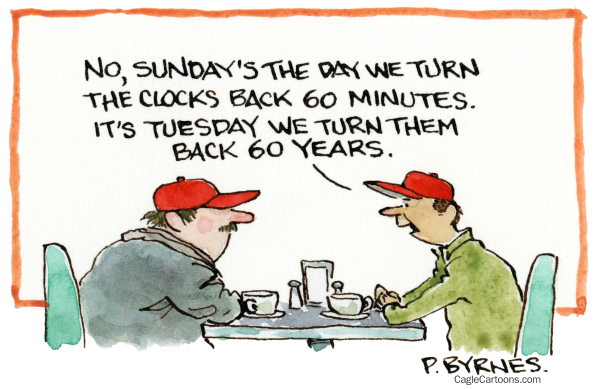
NOTIFY: Y | REPLY | REPLY WITH QUOTE | PERMALINK | TOP | HOME
Quote:
Originally posted by THG:
T
Stupid people don't know they're stupid, and they certainly don't realize how obvious it is to others.
Because that's what happened the last 4 years.
You are an idiot, Ted.
P.S. Fix your fucking signature.
Do Right, Be Right. :)
NOTIFY: Y | REPLY | REPLY WITH QUOTE | PERMALINK | TOP | HOME
Quote:Before the pandemic, the debt had already increased by $5 trillion, all thanks to Trump. Then Trump jumped on the CARES Act, thinking that $2 trillion more debt would guarantee his reelection. He failed to understand, although the CDC told him, that the pandemic would continue long after the money was gone. Mitch McConnell understood and he would not approve of another $2 trillion for the Heroes Act, since most of the money would end up being spent by Biden, in the very likely case Trump lost. Unless Trump wins the election, Mitch is not passing the Heroes Act or any other. Mitch knows that the worse he makes things for a Biden Presidency, the sooner another Republican will be President.
Originally posted by 6IXSTRINGJACK:Quote:
Originally posted by second:
During his 2016 presidential campaign, Donald Trump — even though he had dubbed himself “the king of debt” — promised to slash the mounting national debt until it was completely eliminated within eight years. Four years on, how’s that going? Not well. The National debt is more than $27 trillion, up from less than $20 trillion when Trump took office.
A Plandemic will do that.
Do Right, Be Right. :)
The Joss Whedon script for Serenity, where Wash lives, is Serenity-190pages.pdf at www.mediafire.com/folder/1uwh75oa407q8/Firefly
NOTIFY: Y | REPLY | REPLY WITH QUOTE | PERMALINK | TOP | HOME