

A thread for Democrats Only
POSTED BY: THGRRI
UPDATED: Sunday, September 6, 2026 15:36
VIEWED: 755368
PAGE 171 of 725

The Trump administration shocked scientists earlier this week when it admitted that its plan to gut vehicle fuel economy standards would help take the atmospheric concentrations of CO2 to 790 parts per million, which is almost double current levels. www.eenews.net/stories/1060092895/print
The new study in the Proceedings of the National Academy of Sciences, however, warns that the path to such a catastrophic collapse isn’t so much a steady descent fueled by burning ever more fossil fuels. Rather it is a cliff that once you cross, you trigger a rockslide or an avalanche that brings ruin quickly. www.pnas.org/content/early/2018/07/31/1810141115
“Human emissions of greenhouse gas are not the sole determinant of temperature on Earth,” explained lead author Will Steffen in a Stockholm Resilience Center news release. “Our study suggests that human-induced global warming of 2°C may trigger other Earth system processes, often called ‘feedbacks,’ that can drive further warming,” even if emissions were to start to slowly decline. www.stockholmresilience.org/research/research-news/2018-08-06-planet-a
t-risk-of-heading-towards-hothouse-earth-state.html
One of the most dangerous feedbacks the study talks about is the release of heat-trapping carbon dioxide and methane (CH4) from the melting Arctic permafrost.
Earth’s thawing permafrost threatens to unleash a dangerous climate feedback loop because the northern permafrost contains twice as much carbon as the atmosphere does today. www.nature.com/articles/ngeo1573
So we have the possibility of a runaway catastrophe — where 2°C warming thaws half the permafrost, and the resulting carbon emissions create, say, another 1° C of warming that in turn releases yet more greenhouse gases from the permafrost.
We’re getting dangerously close to a climate death spiral. And Trump’s reelection? Oh, he will promise to fix the climate. And he wouldn't lie about that.
More at https://thinkprogress.org/why-trumps-reelection-may-lead-to-a-climate-
death-spiral-136fcf81c1b7/
The Joss Whedon script for Serenity, where Wash lives, is Serenity-190pages.pdf at www.mediafire.com/folder/1uwh75oa407q8/Firefly
NOTIFY: Y | REPLY | REPLY WITH QUOTE | PERMALINK | TOP | HOME

Oh well.
Do Right, Be Right. :)
NOTIFY: Y | REPLY | REPLY WITH QUOTE | PERMALINK | TOP | HOME
Quote:Remember it is all about your personal preferences, 6ixStringJack. It does not matter which party wins because if you elect the GOP, Trump will save the climate. If you elect the Democrats, they will save the climate. You said there is no reason to prefer one over the other party.
Originally posted by 6IXSTRINGJACK:
Oh well.
Do Right, Be Right. :)
The Joss Whedon script for Serenity, where Wash lives, is Serenity-190pages.pdf at www.mediafire.com/folder/1uwh75oa407q8/Firefly
NOTIFY: Y | REPLY | REPLY WITH QUOTE | PERMALINK | TOP | HOME
Quote:
Originally posted by second:Quote:Remember it is all about your personal preferences, 6ixStringJack. It does not matter which party wins because if you elect the GOP, Trump will save the climate. If you elect the Democrats, they will save the climate. You said there is no reason to prefer one over the other party.
Originally posted by 6IXSTRINGJACK:
Oh well.
Do Right, Be Right. :)
The Joss Whedon script for Serenity, where Wash lives, is Serenity-190pages.pdf at www.mediafire.com/folder/1uwh75oa407q8/Firefly
There isn't. It doesn't matter either way and there's nothing I can do about it.
You're a 1%'er with all the power. Get to work buddy.
Do Right, Be Right. :)
NOTIFY: Y | REPLY | REPLY WITH QUOTE | PERMALINK | TOP | HOME
Quote:I suddenly realized that Trump in the past has said there is no such thing as climate change, but he certainly is the one man in a billion who will admit he was completely wrong, go against the entire Republican establishment, and save the climate. Reelect Trump in 2020 to save Earth from climate change!
Originally posted by 6IXSTRINGJACK:Quote:
Originally posted by second:Quote:Remember it is all about your personal preferences, 6ixStringJack. It does not matter which party wins because if you elect the GOP, Trump will save the climate. If you elect the Democrats, they will save the climate. You said there is no reason to prefer one over the other party.
Originally posted by 6IXSTRINGJACK:
Oh well.
Do Right, Be Right. :)
The Joss Whedon script for Serenity, where Wash lives, is Serenity-190pages.pdf at www.mediafire.com/folder/1uwh75oa407q8/Firefly
There isn't. It doesn't matter either way and there's nothing I can do about it.
You're a 1%'er with all the power. Get to work buddy.
Do Right, Be Right. :)
The Joss Whedon script for Serenity, where Wash lives, is Serenity-190pages.pdf at www.mediafire.com/folder/1uwh75oa407q8/Firefly
NOTIFY: Y | REPLY | REPLY WITH QUOTE | PERMALINK | TOP | HOME

Quote:Well, of course, that's your prerogative. But if you want to buy a cargo-ship of iPhones from China, they just might insist in yuan. Then what?
I am from Texas and we ain't taking any petroyuan for our natural gas or crude. China will pay in U.S. dollars or else we are not selling to them. Obviously the day will come when Texas reservoirs run dry, but until then no petroyuan, only dollars.

There are three "futures" oil markets ... Brent, WTI, (West Texas Intermediate) and now the Petroyuan, which is beginning to pick up business ...
SECOND, you would probably know more about that than I do ....
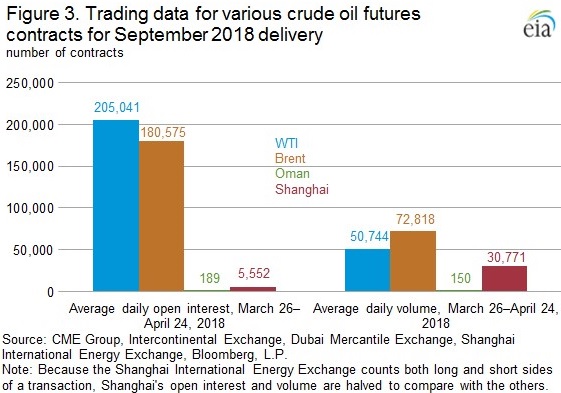
So, just to get back to the thought process on "the dollar" ... If you want to know which currency is being used in international trade, you need to look at the Bank for International Settlements (BIS) Right now, the dollar accounts for roughly 64% of world reserve currency. (It used to be easy to get this figure from the BIS site; now I have to go to some skeezy Cayman website)
Quote:http://www.caymanfinancialreview.com/2018/01/22/the-worlds-reserve-cur
U.S. dollar-denominated assets comprised 63.79 percent of disclosed foreign exchange reserves; euro-denominated assets, 19.91 percent; yen-denominated assets, 4.64 percent; pound-denominated assets, 4.41 percent; Canadian-dollar-denominated assets, 1.95 percent; Australian dollar-denominated assets, 1.77 percent; renminbi-denominated assets, 1.07 percent; Swiss franc-denominated assets, 0.17 percent; and assets denominated in other currencies, 2.30 percent.
rency/
What I was looking for was percent trade settlements in the dollar; I guess I'll have to ... ah ... settle for this stat. The BIS, by the way, recently released a statement that some international banks have engaged in Lehman-like accounting, which means that some banks aren't as stable as they should be. I'll try to find a link.
Anyway, the one problem with this form of accounting is that it doesn't include trade settlements that take place OUTSIDE of the BIS (Central Bank to Central Bank) system, and that would include bilateral trade deals in the form of barter, or monetary exchange outside of the SWIFT, so even if the "dollar world" may be shrinking the percent of dollar settlements remains the same.
One LAST thought ...
Each time the United States pulls the "sanctions" trigger or slaps a fine on a bank (like BNP Paribas) it makes the dollar a less-and-less attractive currency for anyone to deal in. The current list of sanctioned/ embargoed nations includes ...
Cuba, Iran, Syria, Belarus, Eritrea, North Korea, Venezuela, Russia.
And now Turkey
Burma, Code d'Ivoire, Congo, Iraq, Lebanon, Liberia, Libya, Somalia, The Republic of the Sudan Crimea, Afghanistan, Democratic Republic of the Congo, Haiti, Vietnam, Somalia, Sri Lanka, Liberia, Cyprus, Central African Republic, Balkans, Liberia, Yemen, and Zimbabwe.
If you'll notice, some of the sanctioned countries ... Iran, Venezuela, and Russia .... are significant oil producers, and two of the others .... Syria, Turkey ... are pipeline transit nations.
-----------
Pity would be no more,
If we did not MAKE men poor - William Blake
"The messy American environment, where most people don't agree, is perfect for people like me. I CAN DO AS I PLEASE." - SECOND
America is an oligarchy http://www.fireflyfans.net/mthread.aspx?tid=57876
NOTIFY: Y | REPLY | REPLY WITH QUOTE | PERMALINK | TOP | HOME
This is from 21 years ago about sanctions: "Since 1970, unilateral US sanctions have achieved foreign policy goals in only 13 percent of the cases where they have been imposed. In addition to whatever effect repeated failure may have on the credibility of US leadership, other recent research suggests that economic sanctions are costing the United States $15 billion to $19 billion annually in potential exports. This, in turn, translates into 200,000 or more jobs lost in the relatively highly compensated export sector."
https://piie.com/commentary/testimonies/evidence-costs-and-benefits-ec
onomic-sanctions
I'm sure the success rate today is lower than 13% and the cost is much more than 200,000 jobs. Presidents are over-using sanctions.
From this week: "Given current oil market conditions, US policymakers need to better guard against the risk that their sanctions squeeze on Iran could precipitate a new oil shock."
https://piie.com/blogs/realtime-economic-issues-watch/iran-sanctions-r
edux
If the oil shock arrives, it will cost America jobs and money. How much? Who knows? Since the voters and the White House staff don't know, Trump acts as if it is cost free.
The Joss Whedon script for Serenity, where Wash lives, is Serenity-190pages.pdf at www.mediafire.com/folder/1uwh75oa407q8/Firefly
NOTIFY: Y | REPLY | REPLY WITH QUOTE | PERMALINK | TOP | HOME
Dec 29, 2000:
The Clinton administration handed a parting gift to President-elect George W. Bush today, projecting that the federal budget surplus would swell substantially, to nearly $5 trillion, over the next decade.
Administration officials said they expected the surplus to total $4.996 trillion in the 10 years beginning with the start of the next fiscal year, on Oct. 1, 2001. That amounts to an increase of just over $800 billion from the administration's previous projection, of $4.193 trillion for the 10 years that started this October.
from www.nytimes.com/2000/12/29/us/10-year-estimate-of-budget-surplus-surge
s-once-more.html
To understand why the debt has exploded since the start of the century, when there were projections that then $3.4 trillion debt could be paid down or even paid off, it’s necessary to review in detail how this development was fostered by Republicans every step of the way. Three major factors are to blame.
1) The Bush tax cuts of 2001 and 2003
The Bush administration used the budget surplus to reward its rich contributors with tax cuts. Never mind that the stock market had steadily fallen since Bush’s election, signifying that the tech bubble was over and that revenues were contracting.
The 10-year tax cuts, according to most estimates, cost between $2 and $2.5 trillion. When those cuts began to expire during the Obama administration, all but a small portion of the cuts on the top earnings bracket were renewed. Therefore, the total national debt impact of the Bush tax cuts from enactment until 2018 is close to $4 trillion.
2) Never-ending war
Bush, having been caught flat-footed by the 9/11 attacks, could have responded by treating the tragedy as a critical but solvable problem with limited military counterterrorism actions. Instead, he massively militarized the problem, ladled money to the Pentagon, and invaded the wrong country, setting us up for an even more expensive eight-year occupation of Iraq. The occupation served as an incubator for ISIS and created the rationale for massive DOD spending ever since (to be sure, continued through the 8 years of the Obama administration).
The cost? DOD estimates direct costs at around $1.5 trillion, but that’s a laughable lowball. It excludes debt service, but more important, it leaves out the Pentagon’s spending bonanza that wasn’t direct war funding, but which they would not have received absent the hysteria accompanying the War on Terror. And of course, the newly created Department of Homeland Security became a bottomless money pit. A more realistic estimate of all direct and indirect one-time and recurring costs comes to an eye-watering $5.6 trillion.
3) The 2008 financial meltdown
Republicans typically blamed homebuyers who signed their mortgages, the Community Reinvestment Act of 1977, or anything under the sun for the housing bubble and resulting economic collapse. But they refused to condemn the main cause: lax financial regulation. A GOP president and Congress—granted, with help from far too many Democrats—set the stage for the blowout: Chris Cox, Bush’s Securities and Exchange Commission chairman, couldn’t find financial irregularities with a seeing-eye dog. And Alan Greenspan, the supposedly independent Fed chairman, became a shill for adjustable rate mortgages.
Once the economy fell off a cliff, tax revenues from both wages and investments plummeted and government expenditures (such as unemployment, food stamps, and economic stimulus, in addition to the direct cost of government bailout measures) soared. No one has attempted a comprehensive estimate of the effect on the debt of the Great Recession, probably because the uncertainty is so large. But simply by calculating the rapid rate of increase of the debt-to-GDP during the recession period, the housing bubble’s national debt impact of roughly $4 trillion is not far off the mark.
More at https://washingtonmonthly.com/2018/07/21/will-republicans-ever-stop-ly
ing-about-the-debt/
To summarize points
NOTIFY: Y | REPLY | REPLY WITH QUOTE | PERMALINK | TOP | HOME
Congressmen are always running scared.
Painfully often the legislation our politicians pass is designed less to solve problems than to protect the politicians from defeat in our never ending election campaigns. They are, in short, too frightened of voters to govern.
Politics and government in the United States are marked by the fact that U.S. elected officials in many cases have very short terms of office and face the prospect of being defeated in primary elections and have to run for office more as individuals than as standard-bearers for their party and have continually to raise large sums of money in order to finance their own election campaigns. Some of these factors operate in other countries. There is no other country, however, in which all of them operate, and operate simultaneously. The cumulative consequences, as we shall see, are both pervasive and profound.
Americans take the existence of their never-ending election campaign for granted. Some like it, some dislike it, and most are simply bored by it. But they are all conscious of it. In Great Britain, France, Italy, and Canada the constitutional or legal maximum for the duration of the lower house of the national legislature is five years. In Germany and Japan the equivalent term is four years. Only in Australia and New Zealand, whose institutions are in some limited respects modeled on those of the United States, are the legal maximums as short as three years. In having two-year terms the United States stands alone. The fact that the terms of a third of the Senate end every two years means that even if individual senators do not feel themselves to be under continuing electoral pressure, the Senate as a whole does. Despite the Founders' intentions, the Senate's collective electoral sensibilities increasingly resemble those of the House.
Most Americans seem unaware of the fact, but the direct primary -- a government-organized popular election to nominate candidates for public office -- is, for better or worse, an institution peculiar to the United States. Neither primary elections nor their functional equivalents exist anywhere else in the democratic world. It goes without saying that their effect is to add a further dimension of uncertainty and unpredictability to the world of American elective politicians.
To a visitor to America's shores, the never-ending campaign presents a largely unfamiliar spectacle. In other countries election campaigns have both beginnings and ends, and there are even periods, often prolonged periods, when no campaigns take place at all. Other features of American elections are also unfamiliar. In few countries do elections and campaigns cost as much as they do in the United States.
America's permanent election campaign, together with other aspects of American electoral politics, has one crucial consequence, little noticed but vitally important for the functioning of American democracy. Quite simply, the American electoral system places politicians in a highly vulnerable position. Individually and collectively they are more vulnerable, more of the time, to the vicissitudes of electoral politics than are the politicians of any other democratic country. Because they are more vulnerable, they devote more of their time to electioneering, and their conduct in office is more continuously governed by electoral considerations. American politicians' constant and unremitting electoral preoccupations have deleterious consequences for the functioning of the American system. They consume time and scarce resources. Worse, they make it hard for the system as a whole to deal with America's most pressing problems.
Much, much more at www.theatlantic.com/magazine/archive/1997/01/running-scared/376754/
The Joss Whedon script for Serenity, where Wash lives, is Serenity-190pages.pdf at www.mediafire.com/folder/1uwh75oa407q8/Firefly
NOTIFY: Y | REPLY | REPLY WITH QUOTE | PERMALINK | TOP | HOME
The Trump administration is dismantling financial protections for the military
Predatory lenders disproportionately target military members. The Consumer Financial Protection Bureau (CFPB) will no longer supervise them.
The bureau’s supervisory staff offices have typically conducted proactive checks that make sure lenders aren’t charging military members exorbitant interest rates, pushing them into forced arbitration, or otherwise not following guidelines outlined in the Military Lending Act, a 2006 law that protects active duty military members and their families from financial fraud, predatory loans, and credit gouging.
Now the agency, under interim director Mick Mulvaney, is planning to end its use of these supervisory examinations of lenders.
The Trump administration has also proposed changes that could open service members up to predatory practices when they buy cars. The administration has proposed easing restrictions on “gap insurance,” an add-on to car insurance that covers the difference between the amount a car owner owes on the car and the car’s actual cash value.
Gap insurance is typically available from regular insurance companies for a very low price, as little as $20 to $30 a year, but car dealers often mark it up by hundreds of dollars. Current rules effectively block auto dealers from tacking on overpriced gap insurance to military service members, but the administration has sent a proposal to the Defense Department looking to revise the rules. (If the proposal does eventually make it out of the Defense Department, it will ultimately require the approval of the Office of Management and Budget, which Mulvaney also heads.)
More at www.vox.com/policy-and-politics/2018/8/14/17684810/military-lending-ac
t-mick-mulvaney-cfpb-loans
The Joss Whedon script for Serenity, where Wash lives, is Serenity-190pages.pdf at www.mediafire.com/folder/1uwh75oa407q8/Firefly
NOTIFY: Y | REPLY | REPLY WITH QUOTE | PERMALINK | TOP | HOME